ByJohn A
How IDP Automates Document Workflows
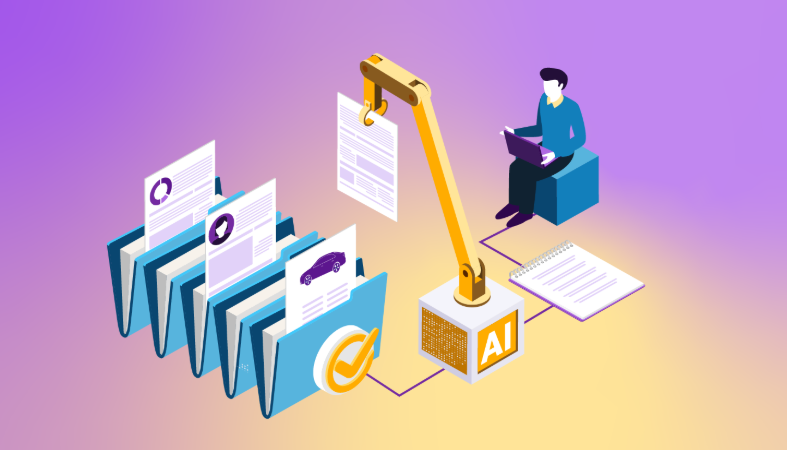
IDP automates document workflows by unifying data reading, classification, extraction, and routing into a cohesive end-to-end process. It ingests diverse inputs, applies robust reading strategies for speed and accuracy, and classifies with deterministic rules plus adaptive learning. Outputs are structured with traceable provenance, validated by confidence scoring and rule checks. Orchestration coordinates tasks across systems for immediate handoffs and parallel processing, underpinned by governance and security. The result is scalable, measurable ROI—and a clear path for implementation.
What IDP Delivers for Document Workflows
IDP delivers end-to-end efficiency for document workflows by automating data extraction, classification, and routing across diverse inputs.
The platform reinforces data governance through standardized metadata, audit trails, and access controls, ensuring compliance and traceability.
It accelerates user onboarding, enabling rapid role-based access, policy enforcement, and clear responsibility assignment, while maintaining flexibility to adapt to evolving process requirements and regulatory landscapes.
See also: studyvera
How IDP Reads, Classifies, and Extracts Data Seamlessly
The platform reads mixed-input documents through a unified data model, enabling seamless recognition of text, layout, and embedded structures. It applies robust reading strategies to interpret diverse formats, prioritizing accuracy and speed. Classification occurs via deterministic rule sets plus adaptive learning, minimizing ambiguity. Extraction focuses on structured outputs with traceable provenance, supporting data labeling and auditability for downstream automation and governance.
From Validation to Routing: Automating the End-to-End Process
From validation to routing, end-to-end automation streamlines decision-making and dispatch. The approach enables validation automation to occur at ingestion, with confidence scoring and rule-based checks.
Routing orchestration then directs tasks across systems, ensuring immediate handoffs and parallel processing where applicable.
In this frame, governance remains explicit, while scalability, reliability, and freedom of operation drive continuous improvement and operational resilience.
Real-World Benefits and Ready-To-Implement Best Practices
Real-world benefits of automated document workflows accrue quickly through faster processing times, improved accuracy, and stronger compliance. Benefits extend to scalable data governance frameworks and auditable trails that support transparent decision-making. Ready-to-implement best practices emphasize modular IDP components, risk management alignment, and continuous monitoring. The approach enables freedom through measurable ROI, reduced manual toil, and resilient, repeatable operations accepted across regulated environments.
Frequently Asked Questions
How Secure Is IDP for Sensitive Documents in Transit and at Rest?
IDP ensures strong in-transit and at-rest protections, aligning with security audits and privacy controls. Data lineage is preserved, multilingual rendering remains compliant, and encryption, access governance, and incident response support a freedom-seeking, risk-conscious stance.
Can IDP Handle Non-Latin Languages With Equal Accuracy?
Anachronism: It computes, like a cryptic oracle, that non-latin handling and script diversity are supported. IDP demonstrates robust multilingual parsing, achieving consistent accuracy across scripts. It prioritizes strategic, concise performance for users seeking freedom.
What Are the Maintenance Requirements After Deployment?
Maintenance after deployment requires a defined cadence: establish maintenance cadence for fixes and updates, monitor performance, and schedule regular audits. Upgrade responsibilities are assigned to designated teams, ensuring compatibility, security patches, and documentation while preserving system autonomy and freedom.
How Quickly Can We Expect ROI After Implementation?
ROI timing depends on organization, but quick wins typically appear within weeks; benefits accrue from streamlined document routing, faster approvals, and improved user adoption, with measurable gains aligning to process efficiency and sustainable cost reductions.
Does IDP Support On-Premises and Cloud Deployment Options?
Yes, it supports on premise vs cloud deployment and deployment scalability; irony aside, this is about choosing flexibility. It offers on-premises and cloud options to align with autonomy, scalable architecture, and strategic freedom for varied environments.
Conclusion
In short, IDP promises a flawless, end-to-end workflow—until reality intrudes with exceptions and noisy data. Its blend of deterministic rules and adaptive learning sounds relentlessly clever, yet a cynical observer notes the inevitable handoffs, latency, and governance audits that follow every automated triumph. Still, the architecture whispers efficiency: reading, classifying, extracting, routing with provenance. If you tolerate the bottlenecks as feature bets, the ROI narrative becomes hard to ignore, even as the process hums along, almost perfectly.